
Val Verde County Criminal Docket Searches
Val Verde County posts no single countywide index for party names or cause numbers. Build your Val Verde County criminal docket search from three pieces instead: the county calendar, the clerk for the right court, and re:SearchTX wherever its statewide coverage reaches. The best key is a complete cause number. Keep every prefix, letter, dash, year, and leading zero exactly as filed. One dropped character can sink the lookup. Searching by name alone? Pair it with a court and a date range. That keeps you from drowning in false matches.
Which clerk holds the record depends on the level of the charge. The District Clerk keeps felony files. County Court at Law handles Class A and B misdemeanors. Class C matters usually sit with a JP or the Del Rio Municipal Court.
- Read the citation, bond paper, notice, or prior order and identify the court.
- Check the calendar under that court and test re:SearchTX with the same cause number.
- Compare court, style, charge, cause number, and hearing date.
- Call the clerk if the matter is absent, new, restricted, or unclear.
- Request the exact docket, order, judgment, or certified disposition needed.
Val Verde Criminal Court Routes
Where a Val Verde case lands shapes everything about the docket. County Court at Law takes Class A and B misdemeanors. Felonies go to the 63rd or 83rd District Court. Class C cases may sit in JP1 through JP4 or the Del Rio Municipal Court. The County Attorney prosecutes the misdemeanors. Custody of the record still follows the court, not the prosecutor.
| Case lane | Court | Custodian |
|---|---|---|
| Felony | 63rd or 83rd District | District Clerk |
| Class A or B | County Court at Law | Confirm with County Clerk |
| Class C county | JP1 through JP4 | Specific JP clerk |
| Del Rio Class C | Municipal Court | Municipal clerk |
The District Clerk page identifies custody for district pleadings and papers.
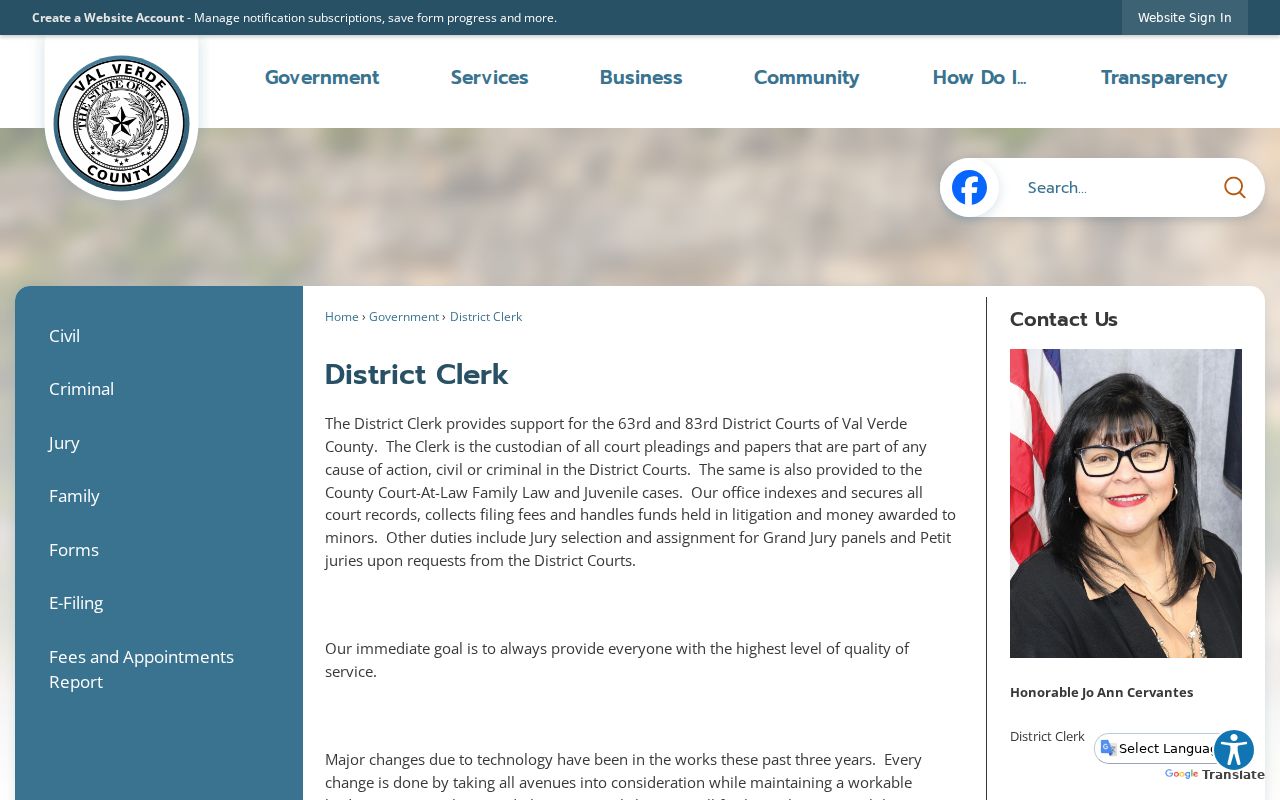
That division of labor is why a setting question may go to a coordinator while a certified-copy request must go to the clerk.
Criminal Dockets: What They Show
Official Val Verde docket samples are scheduling sheets. They are not a guaranteed complete register of every filing in a case. Even so, the fields can carry a lot: court, judge, cause number, defendant or style, listed offense, counsel, bondsman, hearing type, a reactivated flag, reason, interpreter, and remote-access details.
| Cause number | The full identifier linking the setting to the clerk file. |
|---|---|
| Offense | A listed allegation, not proof of guilt. |
| Setting | Arraignment, plea, pretrial, motion, docket call, trial, or sentencing. |
| Reason or reactivated | A status needing the full case record for context. |
| Disposition | An outcome field where included; obtain the judgment for definitive proof. |
Read the attorney, interpreter, Zoom, and bondsman lines as calendar logistics, nothing more, and never stretch them past the official wording.
Val Verde Charges Are Allegations
A charge line on a Val Verde criminal docket is an allegation. It is not a finding of guilt. A trial label marks a setting type; it does not prove a trial actually happened. Likewise, "Cases to be set" may just be a scheduling call. Keep the exact label and the date you retrieved it. Then ask the custodian for the judgment or disposition.
Quick answer: A calendar can confirm that a case was set for an event. It cannot establish the final outcome.
The county's criminal case information describes misdemeanor stages.
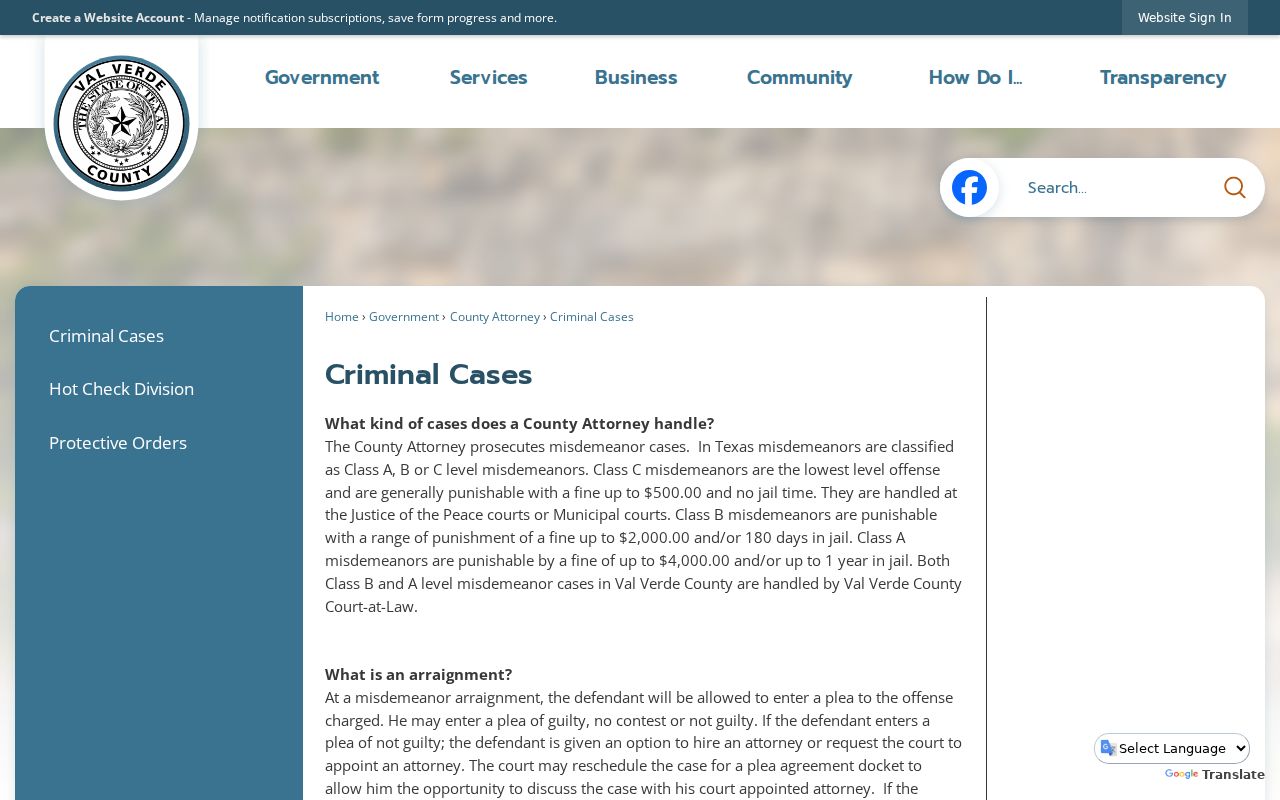
Its stage descriptions support careful reading of arraignment, plea, pretrial, and trial entries.
Criminal Case Stages on the Docket
Arraignment is the first stage the county describes. There the accused may plead guilty, no contest, or not guilty. A not-guilty route can run through appointed counsel. It may also involve a later plea-agreement docket, pretrial motions, and a bench or jury trial. The County Attorney conference comes after arraignment or a waiver of it.
Filing → Arraignment → Pretrial → Plea or Trial → Disposition → Sentencing
Cases rarely march through every step in order. A reset does not end a case, and a plea setting does not prove any deal was struck. Once you have the cause number, the county's docket search routes are the tool to use.
Val Verde Criminal Clerk Channels
Phone numbers and addresses matter here. The District Clerk's criminal and juvenile line is 830-774-7539. The main office is 830-774-7538 at 100 E. Broadway, first floor, Del Rio. Mail should go to P.O. Box 1544, Del Rio, TX 78841-1544. The official form allows orders by email, telephone, fax, or in person. Delivery can come by pickup, mail, email, or fax. Send record forms to districtclerk-recordsrequest@valverdecounty.texas.gov.
Be specific in the request. Give the court, cause number, party or style, date range, and document type. The form prints no full fee schedule, so call to prepay. Processing may run up to 10 business days. For a County Court at Law file, start with the County Clerk at 830-774-7564. Confirm custody before any money changes hands.
Say exactly what paper you want. A docket sheet is not a calendar, judgment, plea document, or sentencing order. A request should tell them apart. State whether an ordinary or certified copy is needed. Email or fax delivery does not make a copy certified. Ask what the certification will look like and whether pickup or mail is required. Keep your request date and a copy of what you sent. Any follow-up can then point to the same court, cause number, and document list.
Walking in is a solid fallback, though official sources do not confirm a public self-service terminal. Ask staff whether an in-office index can be searched for you. A portal query that comes up empty does not prove no case exists. New filings can lag. Older material may not be indexed. Restricted records may not appear at all. Calling first also helps you reach the right office before sending a form or sensitive data.
Val Verde County Criminal Docket Courts
The 83rd District Court and the 63rd District Court are general-jurisdiction courts. Their pages and calendars help confirm settings, but the District Clerk remains the office that keeps the filed records.
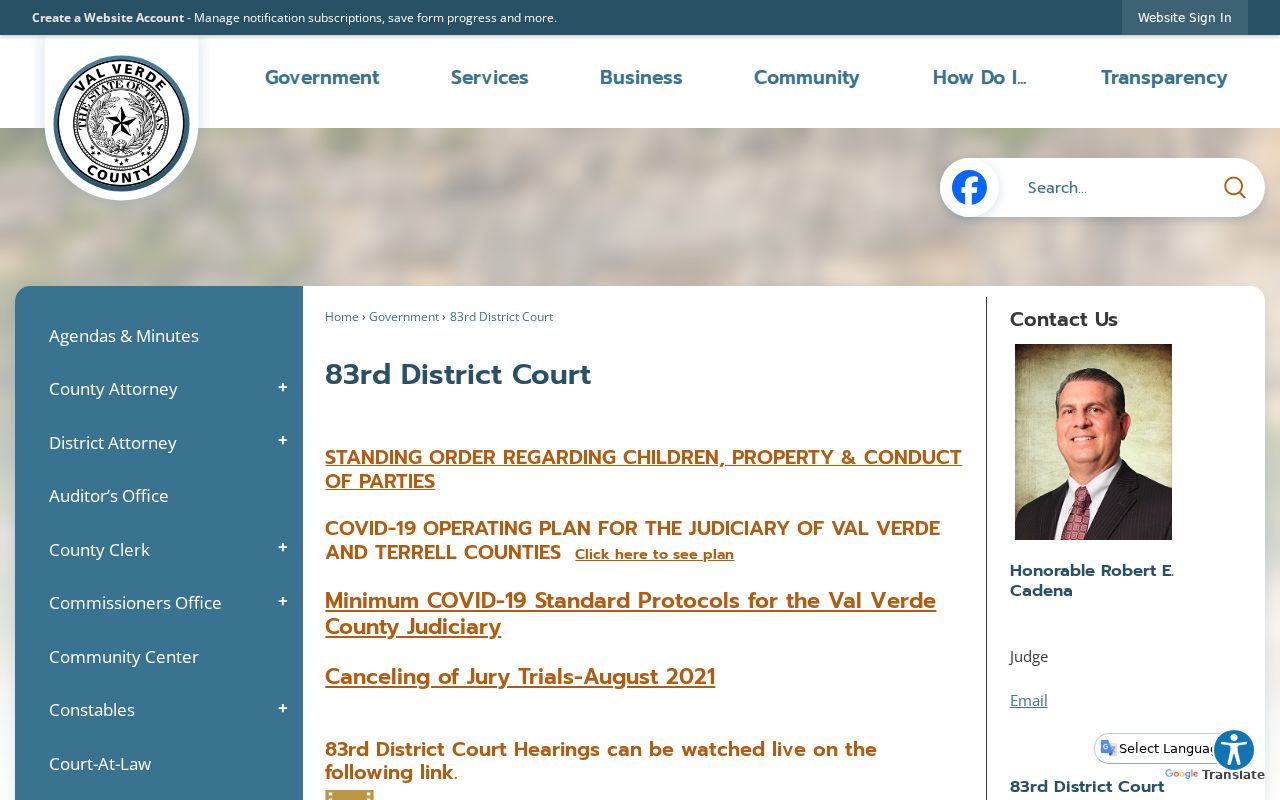
A court page offers current operational details. Yet it never replaces the official docket.
County Court at Law carries the county's misdemeanor lane. JPs and the Del Rio Municipal Court keep their own Class C records. For federal matters, the Western District of Texas runs on CM/ECF and PACER.
Val Verde Special Criminal Dockets
One wrinkle: an April 2025 Operation Lone Star appointment addendum covers specified case categories. It spans the 63rd, 83rd, and County Court-at-Law context. Treat it as a dated program, not a separate court or a complete case list. Match any label like it to the cause number and the tribunal actually assigned. The County Court at Law page adds local misdemeanor and special-calendar context.
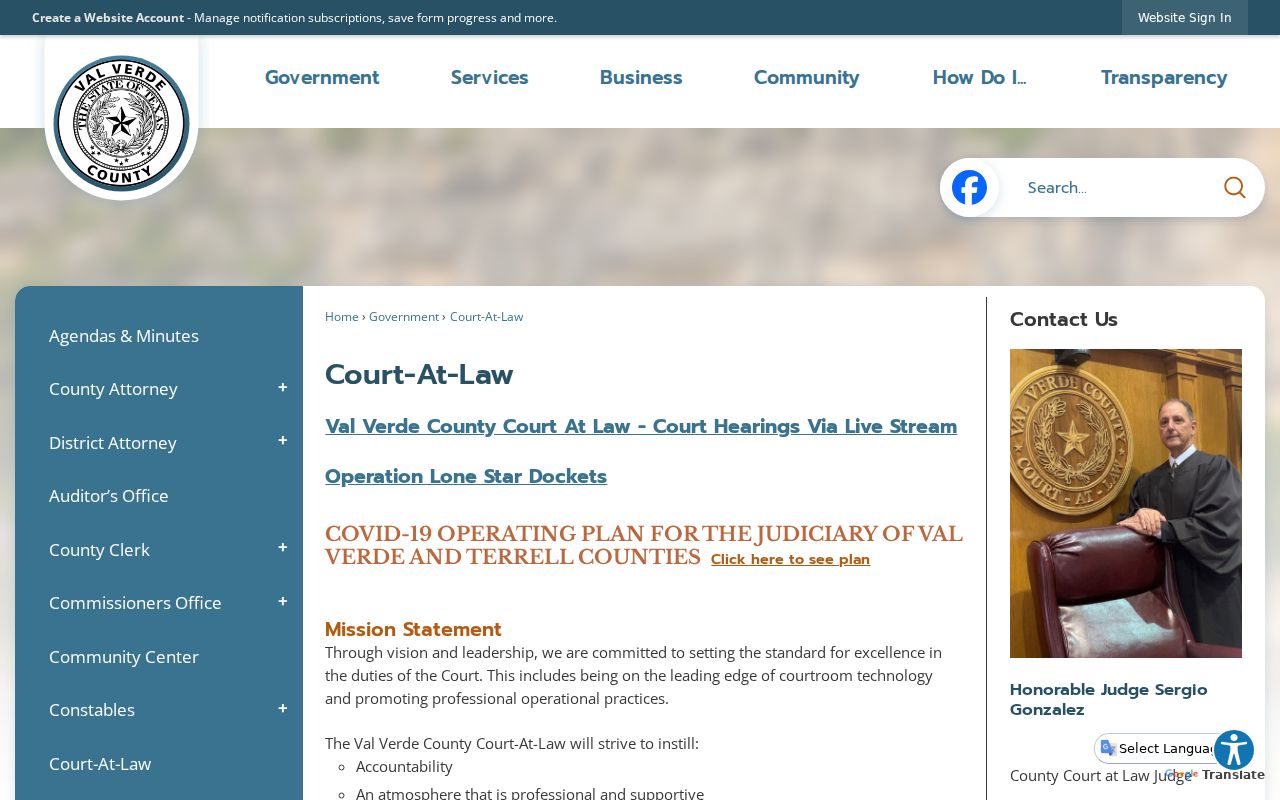
A program label changes scheduling only. It decides nothing about guilt, outcome, or who may see the file. In Val Verde County, standing orders and local rules still steer docket call, filing format, remote appearances, and continuance practice. Pull the current rule from the Texas Local Rules Public system by Val Verde County and the assigned court. An archived rule may explain an old docket format. It cannot set a live deadline. Trust the current order, the live calendar, and confirmation straight from the court. A livestream link works the same way. It may help you find a proceeding happening now. It promises neither that every hearing is streamed nor that the full filed record sits there. Anyone following a public case should keep the calendar, the livestream, the docket entries, and clerk-issued documents separate, and note the cause number and retrieval date for each source.
Access Rules for Criminal Dockets
Court rules and other law control access here. The Texas Public Information Act is not the only route. Juvenile, sealed, and nondisclosed material may be withheld, and a missing result can also reflect portal lag or thin electronic coverage.
Key Rules:
Texas Government Code § 552.0035 places judiciary access under Supreme Court rules or other law.
Texas Rule of Judicial Administration 12 provides a judicial-record request framework within its scope.
Texas Family Code Chapter 58 limits specified juvenile records.
Ask the clerk what part of the docket is public and which order or rule supports any denial.
Verify Val Verde Criminal Settings
A setting that looks wrong deserves a second pass. Check the selected calendar first, then past events. For answers, call the 63rd court at 830-774-7523, the 83rd at 830-774-7654, or County Court at Law at 830-774-7575. The county documented a coordinator transition in the 83rd in May 2026, so the current directory is the one to use.
Confirm remote instructions on the live court page. Old PDFs can carry expired meeting data. Those two habits prevent most surprises. When you need a certified record, go back to the clerk; for attendance, follow the court's latest order.
The calendar interface offers list, week, and month views plus start and end dates, keywords, past events, printing, and subscriptions. Its selector even lists non-court county functions. Record the exact calendar, the date checked, and the event wording. Picking "Main Calendar" without confirming a court can return a result with no tie to the criminal case you are researching.
No event appearing is not proof of no hearing. Test the 63rd, the 83rd, County Court at Law, and the relevant JP calendar one at a time. A newly filed or reset matter can lag online. Mail and email work for records but poorly for a same-day setting check. Call the coordinator or clerk when attendance is close. In-person help is available at the responsible office during posted hours, though no official source promises a public self-service terminal.
Remote access needs the same care. A livestream link does not prove every hearing is public or streamed. Old setting sheets can hold expired meeting identifiers. Interpreter fields in sample calendars show language arrangements can be tracked, but no service is guaranteed without a request. Contact the assigned court early for current remote and language-access instructions.
Val Verde Docket Checkpoints
Keep four facts together. These are the court name, the cause number, the search date, and the source. That record speeds later clerk verification and cuts confusion between courts. When two sources clash, let the current court notice govern attendance. The clerk-issued record governs the filed case history.